
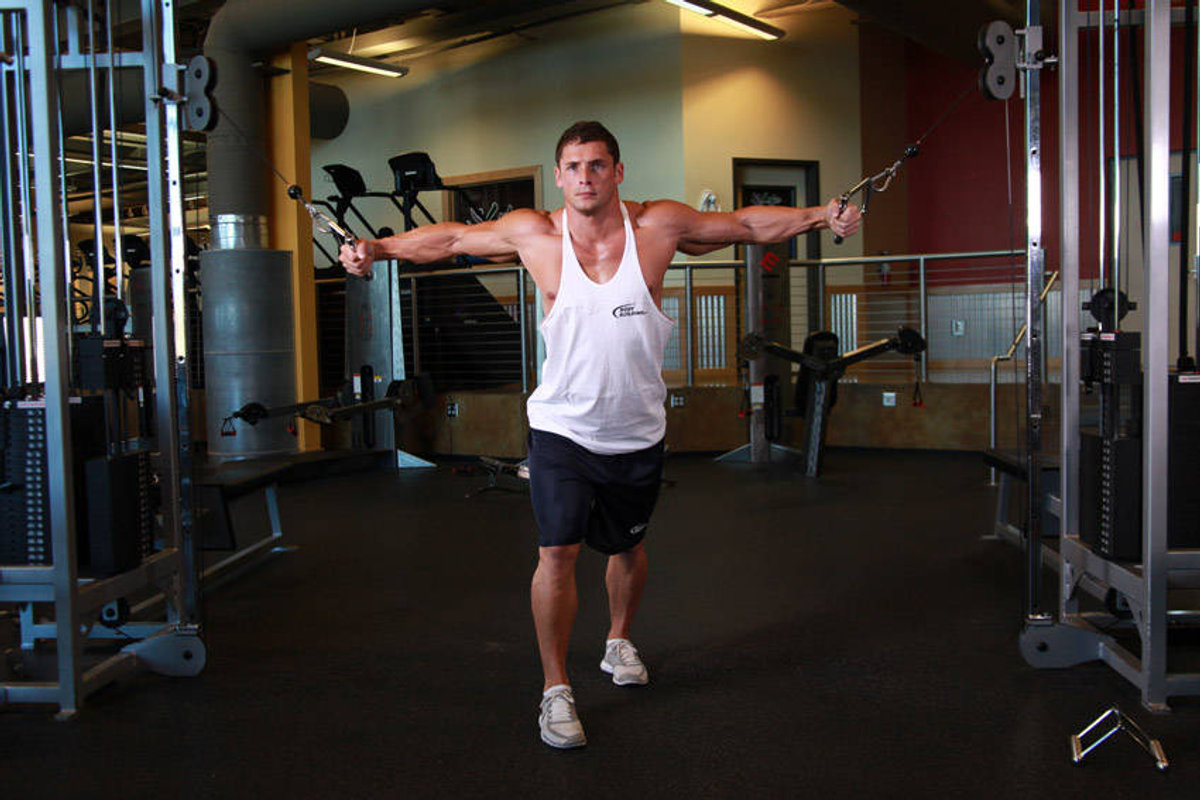
Cable Crossover
Safety Rating for 40+
Benefits for 40+
Cable crossovers offer high chest isolation with minimal systemic fatigue – ideal for 40+ as recovery capacity is limited and must be used efficiently. The constant cable tension stimulates the muscle evenly throughout the entire ROM, maximizing the quality of every set. Grgic et al. (2021) showed that training near failure (safely achievable here) produces similar hypertrophy to training to failure – with significantly less recovery demand.
Form Cues
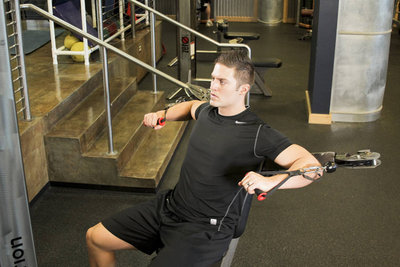
- Set cables high, slight forward lean of the torso
- Bring arms together in a wide arc downward and forward
- Keep elbows slightly bent — do not lock out
Common Mistakes
- Opening arms too far back – the stretch should be comfortable, never painful; tendon elasticity is reduced after 40
- Locking out elbows – slight bend protects the elbow joint and biceps tendon
- Using too much body momentum – isolate the chest, don't involve the whole body
- Weight too heavy for clean execution – isolation requires precision, not maximum load
Modifications
Beginner
Start with minimal weight and learn the arc movement. Initially use Pec Deck machine as a precursor – same movement, but guided path.
For Joint Issues
For shoulder issues: significantly limit range of motion – open arms only to shoulder plane. Setting cable position slightly lower can reduce shoulder stress.
Advanced
Single-arm execution for enhanced core activation. Pause in the contracted position (2–3 sec squeeze). Drop sets for additional volume.
Scientific Basis
Isolates chest with constant cable resistance emphasizing adduction — the primary function of pectoralis major. High SFR with low systemic fatigue. Safe to train close to failure (RPE 8–10).
Contraindications
- Acute shoulder impingement with pain in the open arm position
- Partial biceps tendon tear or active inflammation
- Severe shoulder instability (the open arm pattern may subluxate)
- Acute pectoral strain
Related Exercises
Related Guides