
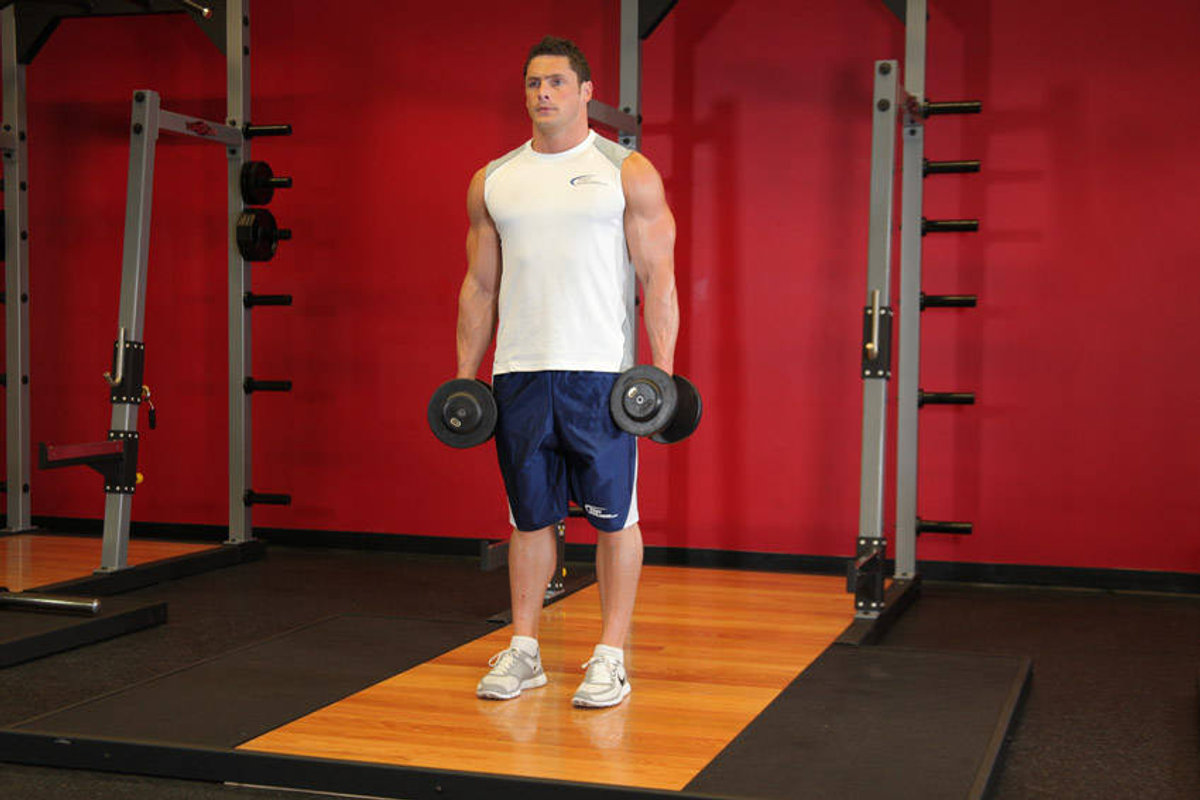
Dumbbell Reverse Lunge
Safety Rating for 40+
Benefits for 40+
The reverse lunge is the most knee-friendly lunge variation and therefore ideal for over-40 trainees with knee issues. Since the deceleration force that acts on the front knee in forward lunges is eliminated, patellofemoral shear forces are significantly reduced. Simultaneously, it trains balance and proprioception – skills that must be actively maintained from the fifth decade to minimize fall risk.
Form Cues
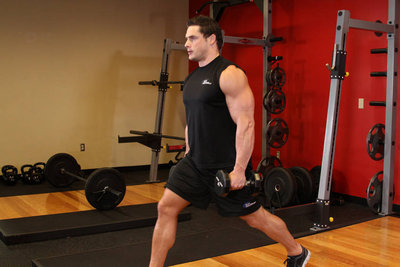
- Step BACKWARD – more controlled than forward
- Lower rear knee toward the floor, torso upright
- Front knee stays stable above the foot – no lateral collapse
Common Mistakes
- Step backward too short – the front knee flexes too much
- Torso tips forward – especially common in over-40s with weak core
- Rear foot is not placed down with control, disrupting balance
- Front leg knee deviates inward
Modifications
Beginner
Start without weight, one hand on wall for balance. Reduce stride length until the movement is controlled and pain-free.
For Joint Issues
For knee issues: lower rear knee only to pain-free depth. Keep front shin as vertical as possible. For hip issues: shorten stride length and adjust range of motion.
Advanced
Deficit reverse lunge (front foot elevated) for extended range of motion. Walking reverse lunges for increased balance demands. Tempo variation: 3-second eccentric.
Scientific Basis
Reverse lunges produce less shear force on the front knee than forward variants because the deceleration force is eliminated. Research recommends lunges as Tier 2 progression – the reverse variant is the most knee-friendly form.
Contraindications
- Acute knee joint inflammation despite the more knee-friendly execution
- Severe balance disorders posing fall risk
- Acute hip flexor or groin complaints
Related Exercises
Related Guides