Reverse Cable Curl
Safety Rating for 40+
Benefits for 40+
Specifically strengthens the wrist extensors and brachioradialis – a direct prevention against lateral epicondylitis (tennis elbow) common after 40. The balance between forearm flexors and extensors is crucial, as imbalances lead to overuse injuries faster with degenerating tendons. The grip strength component supports functional daily capacity that declines with age.
Form Cues
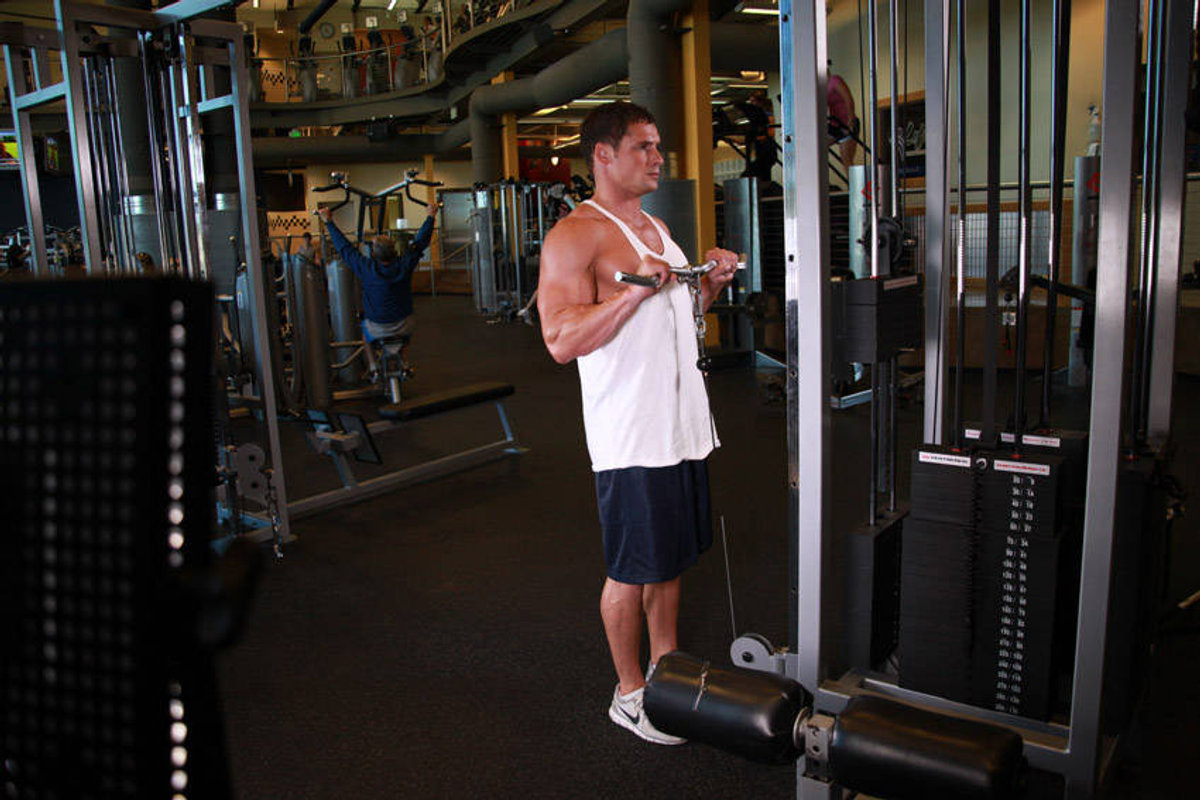
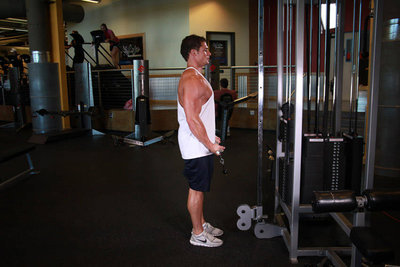
- Grip bar at low cable with overhand grip (pronation)
- Elbows fixed, curl bar upward under control
- Lighter weight than underhand – brachioradialis is weaker
Common Mistakes
- Too heavy weight – brachioradialis and extensors are significantly weaker than biceps, ego lifting leads to compensation
- Wrists bending downward – drastically increases stress on wrist extensors
- Elbows drifting forward – reduces brachioradialis activation
- Neglecting this exercise in favor of standard curls – especially for 40+, the extensors are essential for joint balance
Modifications
Beginner
Very light weight, focus on wrist stability. 15–20 reps to build up the weaker extensors.
For Joint Issues
For lateral epicondylitis: use EZ-bar attachment instead of straight bar for more ergonomic grip. Drastically reduce weight. For acute pain: switch to hammer curl (neutral grip).
Advanced
Combination with palms-down wrist curls as forearm superset. Or: slow tempo 4-0-2-0 for enhanced eccentric tendon adaptation.
Scientific Basis
Pronated grip shifts load to the brachioradialis and forearm extensors – commonly neglected muscles. Cable resistance compensates for the lack of resistance at the turning point. Important for complete forearm development and grip strength.
Contraindications
- Acute lateral epicondylitis (tennis elbow) – pronation and extensor loading directly worsens symptoms
- Acute tendon sheath inflammation of the wrist extensors
- De Quervain's syndrome – thumb/wrist movement under load is contraindicated
Related Exercises
Related Guides