
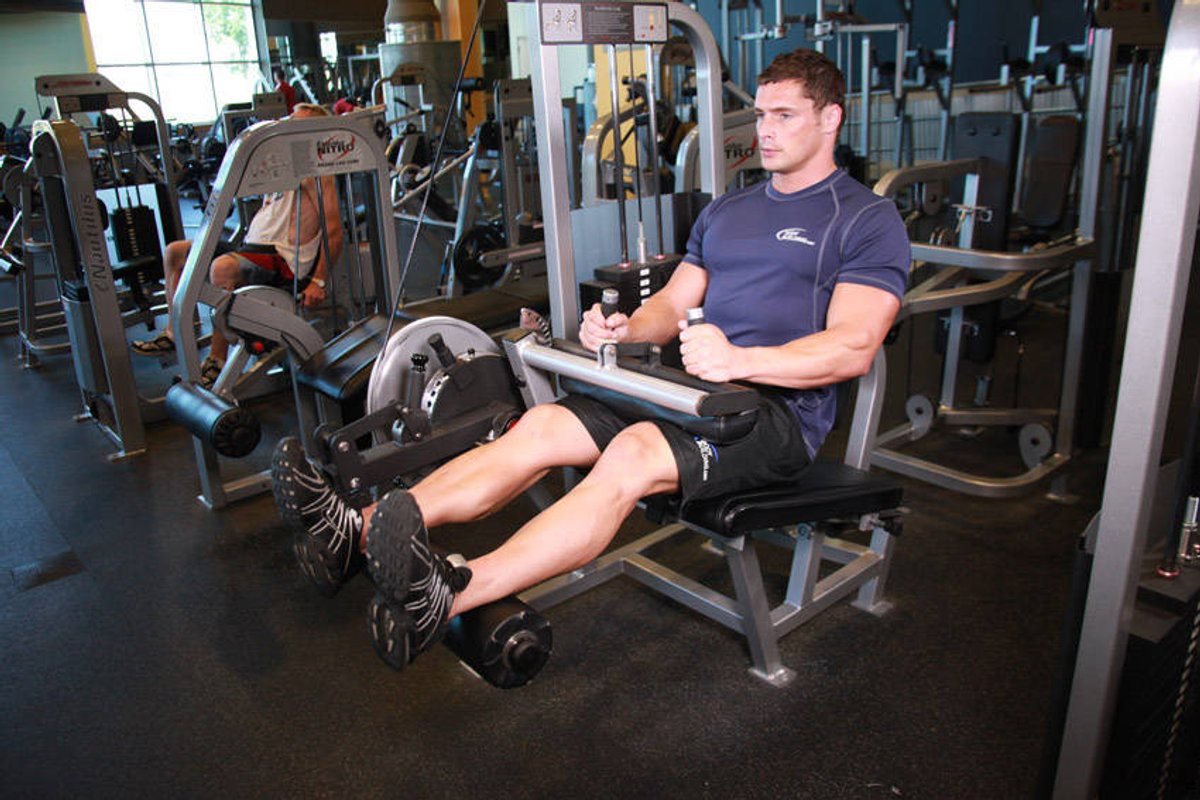
Seated Leg Curl
Safety Rating for 40+
Benefits for 40+
The seated leg curl complements the lying leg curl through a different tension profile: the extended hip position shortens the hamstrings at the starting position, emphasizing different muscle portions. Combining both variations optimizes hypertrophy across the full muscle length. The high SFR and machine safety make this exercise ideal for over-40 trainees with reduced recovery capacity.
Form Cues
- Press thigh pad firmly against legs – prevents lifting
- Pad just above the heel, back pressed into seat
- Aim for full knee flexion, return under control
Common Mistakes
- Back comes away from the pad – negates the advantages of the seated position
- Thigh pad not tight enough – allows the thigh to lift
- Too fast movement without eccentric control
- Too heavy weight with compensatory body movement
Modifications
Beginner
Start with light weight and full ROM. Set up machine carefully: pivot aligned to knee center, pad at lower shin.
For Joint Issues
For knee issues: limit ROM to pain-free range. Slow tempo (3/3/1) reduces peak forces. For back issues: keep back against the pad at all times.
Advanced
Single-leg training for asymmetry correction. Drop sets for maximum metabolic stress. Combination with lying leg curl as a superset.
Scientific Basis
Seated position extends the hip and places hamstrings in a shortened starting position – complementary to lying leg curl. Recent studies show combining both variations optimizes hamstring hypertrophy across the full muscle length.
Contraindications
- Acute hamstring strain or tear
- Acute popliteal complaints
- Severe knee instability (e.g., after ACL tear without reconstruction)
Related Exercises
Related Guides