Triceps Pushdown (Bar)
Safety Rating for 40+
Benefits for 40+
The cable triceps pushdown has the highest stimulus-to-fatigue ratio of all triceps exercises – maximum muscle stimulus with minimal joint and systemic stress. Especially valuable for 40+ since the exercise can be safely trained to RPE 10 without overloading shoulders or elbows. The constant cable tension promotes tendon adaptation through even eccentric loading – crucial with the reduced collagen turnover rate after 40.
Form Cues
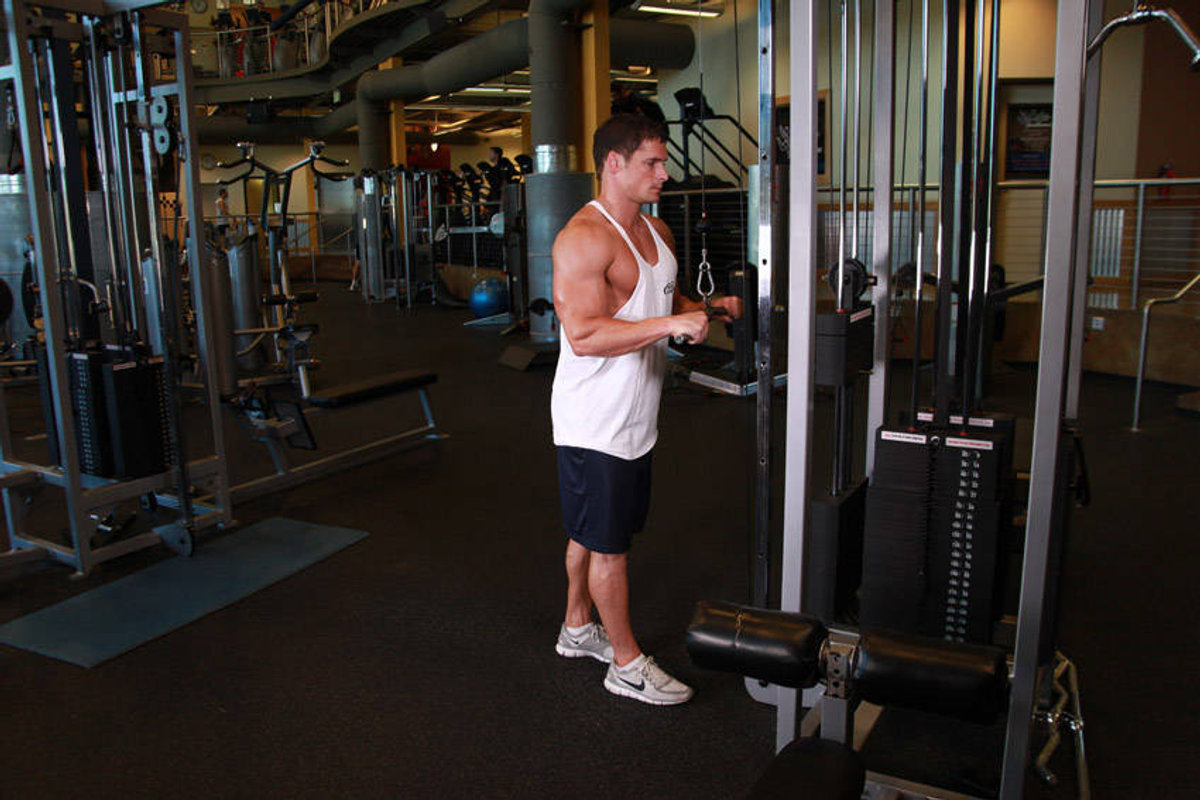
- Bar at high cable with overhand grip, elbows fixed at body
- Push bar down until arms are fully extended
- Return under control – upper arms don't move
Common Mistakes
- Elbows drifting forward and upper arms assisting – transforms isolation into a pressing movement
- Torso leaning over the bar – uses body weight instead of triceps strength
- Wrists bending – increased risk of wrist extensor irritation for 40+
- Too heavy weight forcing momentum from torso – reduces SFR and increases injury risk
Modifications
Beginner
Light weight, focus on elbow fixation. Pause in the extended position to build contraction awareness.
For Joint Issues
For elbow issues (epicondylitis): switch to rope attachment for wrist-neutral grip. Limit ROM to 90° if painful. For severe pain: machine triceps extension as alternative.
Advanced
Use drop sets (pin adjustment on cable). Or: slow 4-second eccentric for enhanced tendon adaptation and hypertrophy.
Scientific Basis
Classic triceps isolation with highest SFR. Cable provides constant resistance. Pronated grip emphasizes the lateral triceps head. Safe to train to failure (RPE 8–10) per research.
Contraindications
- Acute lateral epicondylitis – the pronated grip directly stresses the affected tendons
- Acute olecranon bursitis – full extension worsens the pressure
- Acute wrist instability – the bar forces a fixed grip position
Related Exercises
Related Guides