
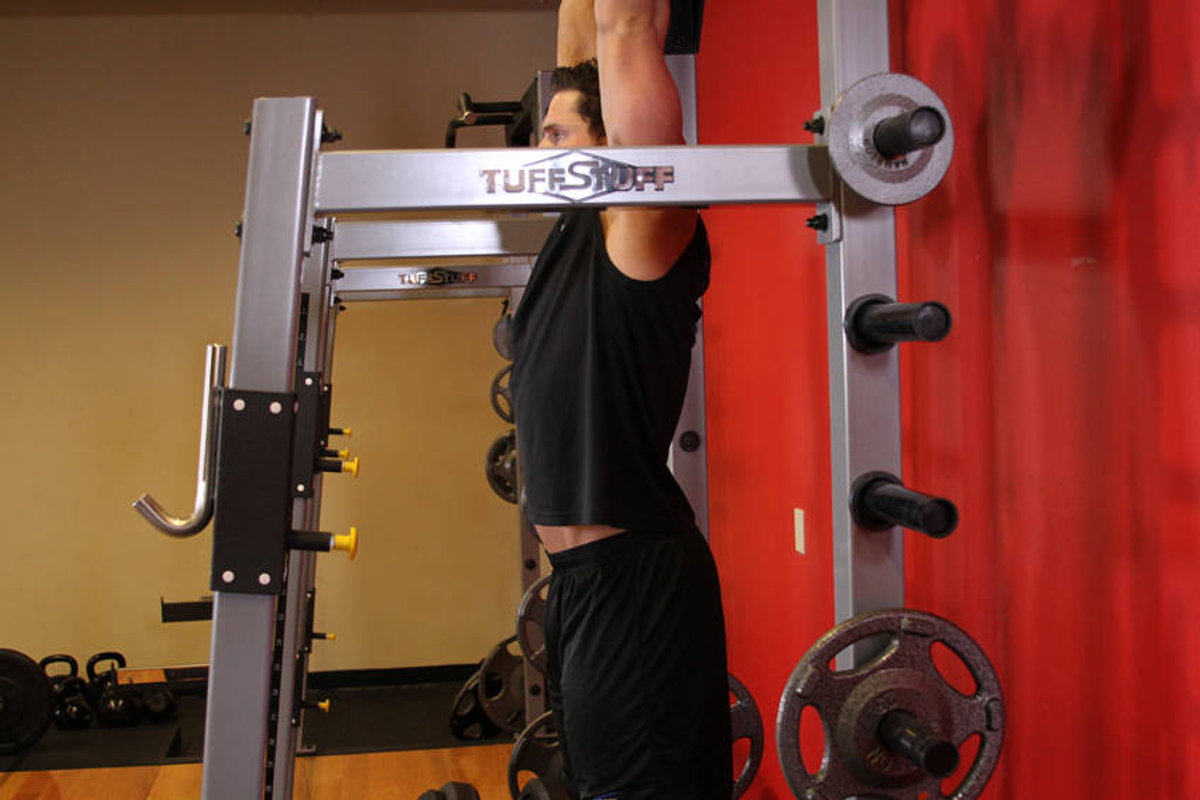
Hanging Leg Raise
Safety Rating for 40+
Benefits for 40+
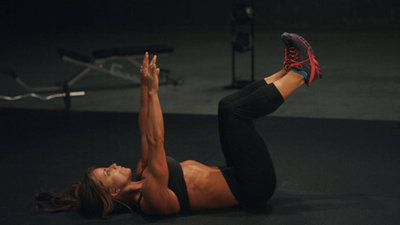
The hanging leg raise is an advanced core exercise that simultaneously trains grip strength – a marker identified in research as an indicator of overall health and longevity in 40+. The hanging position decompresses the spine, which can be therapeutically valuable after a day of sitting. The exercise requires and promotes shoulder stability, which declines after 40 due to rotator cuff degeneration. However, it's only suitable for 40+ with sufficient grip strength and shoulder stability – for everyone else, the lying leg raise is the safer alternative.
Form Cues
- Hang from pull-up bar, actively depress shoulder blades
- Raise legs with straight or slightly bent knees under control
- NO swinging – stop immediately if movement becomes uncontrolled
Common Mistakes
- Using momentum instead of raising legs with control – for 40+ with lumbar issues, swinging can trigger acute pain
- Letting shoulders shrug up instead of actively depressing scapulae – significantly increases impingement risk
- Grip strength insufficient, causing exercise to end from grip failure rather than muscle fatigue – limits the core training effect
- Dropping legs instead of lowering with control – the eccentric phase is crucial for muscular stimulus
Modifications
Beginner
Raise knees instead of straight legs (hanging knee raise). Alternatively: use captain's chair with arm supports to eliminate the grip requirement.
For Joint Issues
For shoulder issues: switch to lying leg raise (flat bench lying leg raise). For wrist issues: use straps or arm supports. For back issues: knee variation only and stop immediately if lumbar discomfort occurs.
Advanced
Toes to bar, ankle weights, or windshield wipers for additional rotational component.
Scientific Basis
Advanced hip flexion exercise training rectus abdominis under full-body tension. Tier 2: requires solid grip strength, shoulder stability, and trunk control. Caution back: swinging can load the lumbar spine – only perform with full control.
Contraindications
- Active shoulder impingement or rotator cuff injury – the hanging position under load can worsen symptoms
- Acute disc herniation – uncontrolled swinging can additionally load the disc
- Severe grip weakness or carpal tunnel syndrome – fall risk from grip failure
- Shoulder joint instability (dislocation tendency) – hanging position under dynamic load is contraindicated
Related Exercises
Related Guide