
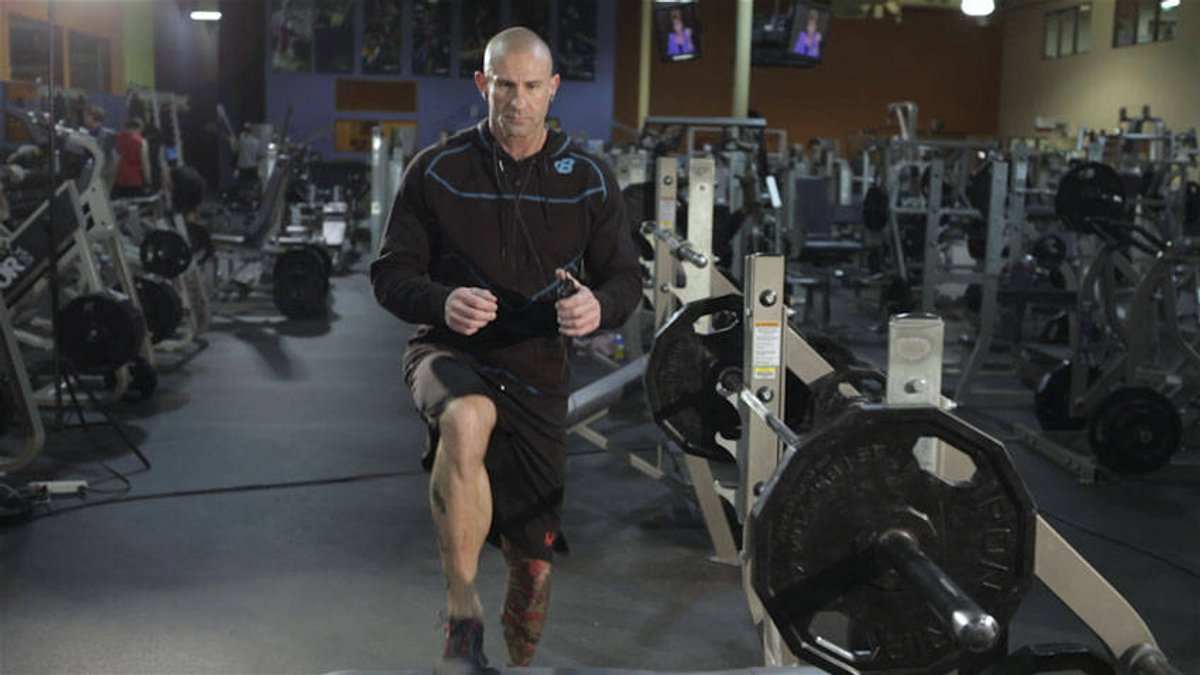
Step-Up with Knee Raise
Safety Rating for 40+
Benefits for 40+
The combination of step-up and knee raise trains not only leg musculature but also the hip flexor and dynamic balance – both abilities that decline after 40 and directly affect gait safety. As a bodyweight exercise, it provides a gentle entry without joint overload. The additional balance challenge from single-leg standing at the highest point promotes proprioception, whose maintenance is critical for fall prevention.
Form Cues
- Step onto a stable platform, raising the free knee to chest
- Upright torso, core engaged for balance
- Lower under control – don't jump down
Common Mistakes
- Pushing off with the lower leg instead of stepping up with control using the top leg
- Knee raise performed with jerky, uncontrolled motion – increases fall risk
- Torso tips forward instead of remaining upright
- Jumping down instead of controlled lowering
Modifications
Beginner
Use a low step (15–20 cm). Omit the knee raise and add it only when balance is reliable. Hand on wall for additional stability.
For Joint Issues
For knee issues: reduce step height. For hip issues: reduce knee raise height to pain-free range. For balance issues: practice near a wall.
Advanced
Hold light dumbbells in hands. Increase step height. Balance on one leg at the top for 3–5 seconds.
Scientific Basis
Combines the osteogenic benefits of step-ups with hip flexion and balance training. Bodyweight version ideal as entry or warm-up. The knee raise additionally activates the hip flexor and challenges balance.
Contraindications
- Severe balance disorders without available support – acute fall risk
- Acute hip flexor inflammation or injury
- Acute knee joint inflammation
Related Exercises

Related Guide