
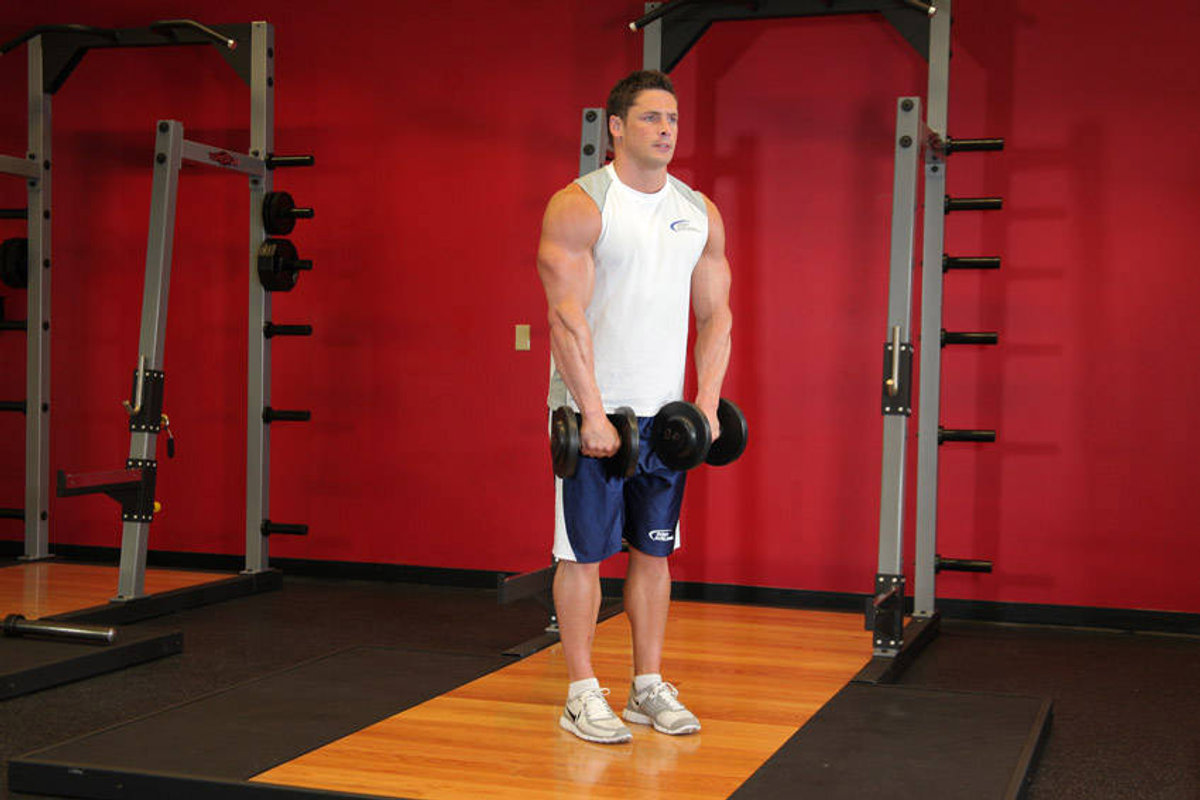
Dumbbell Front Raise
Safety Rating for 40+
Benefits for 40+
Front raises can specifically correct anterior deltoid deficits that develop in 40+ trainees after shoulder injuries or extended training breaks. With correct execution (maximum 90°), joint stress is moderate. The exercise supports shoulder stability during daily movements like lifting objects in front of the body – a function that becomes increasingly important with age.
Form Cues
- Raise dumbbell in front of the body to shoulder height – not higher
- Arms slightly bent, controlled tempo without momentum
- Alternate arms or perform bilaterally
Common Mistakes
- Raising above 90° flexion – unnecessarily increases shoulder stress, especially with narrowed subacromial space
- Using momentum from the torso by leaning back – loads the lumbar spine and reduces muscle stimulus
- Choosing weights too heavy – the anterior deltoid already receives significant volume from pressing exercises
- Lifting both arms simultaneously with momentum instead of controlled alternating
Modifications
Beginner
Alternate rather than bilateral for better control. Start with very light weights (2–4 kg). Perform seated to eliminate momentum.
For Joint Issues
For shoulder impingement: use neutral hammer grip (thumbs up), limit ROM to 75°. If pain persists, remove the exercise – the anterior deltoid is already sufficiently trained through pressing exercises.
Advanced
With resistance band instead of dumbbell for progressive resistance at the end position. Or: combination with lateral raises as superset without rest.
Scientific Basis
Isolates the anterior deltoid. Moderate SFR since the front delt is already heavily recruited through pressing exercises. Targeted use for deficits – not as primary volume exercise. Above 90° shoulder stress increases.
Contraindications
- Acute shoulder impingement symptoms – frontal elevation compresses the subacromial space
- Acute biceps tendon inflammation (long head crosses the shoulder joint)
- Severe thoracic kyphosis – unfavorably alters shoulder position during front raises
Related Exercises
Related Guides