
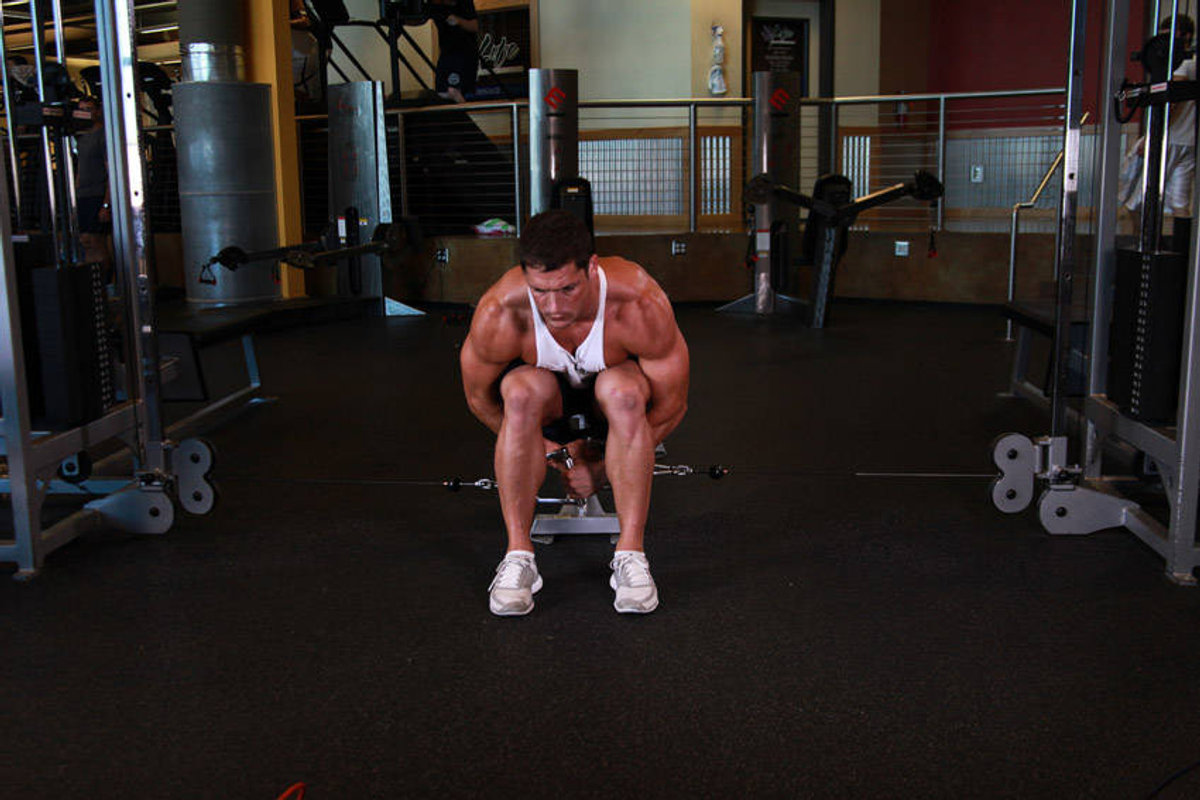
Seated Cable Lateral Raise
Safety Rating for 40+
Benefits for 40+
The cable variant offers constant resistance throughout the full range of motion – a significant advantage over dumbbells that provide no tension at the bottom. For 40+ trainees this means more effective stimulus per rep, maximizing volume efficiency with limited recovery capacity. The seated position eliminates all momentum and protects the lumbar spine.
Form Cues
- Cable at lowest setting, seated sideways to the cable tower
- Raise arm laterally to shoulder height – not higher
- Seated position prevents momentum and enforces clean execution
Common Mistakes
- Raising above shoulder height – same impingement risk as dumbbell lateral raises
- Leaning torso toward the cable to move more weight – reduces stimulus and loads spinal lateral flexion
- Letting cable return too quickly – constant cable tension must be actively controlled
- Shrugging shoulder (scapular elevation) instead of performing pure abduction
Modifications
Beginner
Start with minimal weight to get familiar with constant cable resistance. Train both arms sequentially, not simultaneously.
For Joint Issues
For shoulder impingement: raise arm slightly forward (30° scapular plane) instead of strictly lateral. Limit ROM to 75°. Switch to dumbbell scaption if painful.
Advanced
Iso-hold at the top for 3–5 seconds per rep. Or: rest-pause sets (set to RPE 9, 15 sec pause, more reps to RPE 10).
Scientific Basis
Constant cable resistance throughout full ROM – dumbbells lose tension at the bottom. Seated position eliminates body sway. Ideal for controlled volume accumulation in 40+.
Contraindications
- Acute shoulder impingement with pain during lateral elevation
- Acute supraspinatus tendon or bursa inflammation
- Severe AC joint arthritis
Related Exercises
Related Guides