Goblet Squat
Safety Rating for 40+
Benefits for 40+
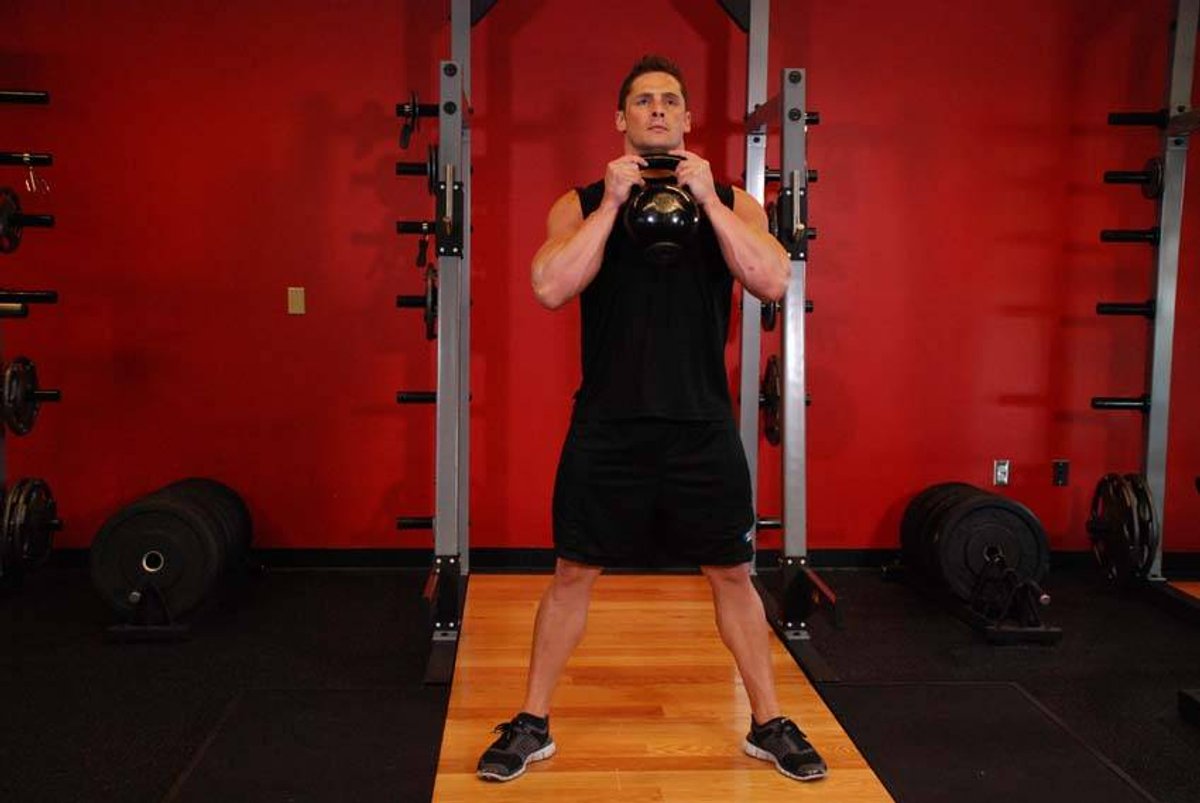
The goblet squat is one of the most valuable squat variations for those over 40, as front-loading forces an upright torso and significantly reduces lumbar spine stress. Its self-limiting nature – the weight at chest height naturally caps maximum load – protects against overloading tendons and ligaments that become more vulnerable with age. Simultaneously, the deep squat pattern trains hip mobility, whose decline after 40 is a major contributor to functional limitations in daily life.
Form Cues
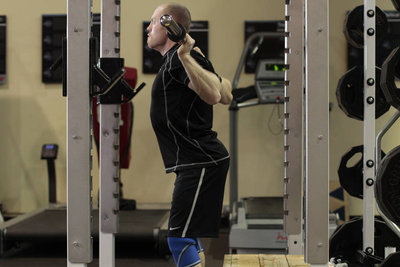
- Hold dumbbell or kettlebell at chest level, elbows pointing down
- Squat deep – elbows between knees, upright torso
- Weight on heels, push knees in line with toes
Common Mistakes
- Choosing too heavy a weight, causing the torso to tilt forward – especially common with declining thoracic mobility after 40
- Heels lifting off the floor – often caused by tight calves or restricted ankle mobility that increases with age
- Knees caving inward (valgus) – indicates weak hip abductors that should be specifically trained in the 40+ population
- Lowering too quickly without eccentric control – unnecessarily increases shear forces on the knee
Modifications
Beginner
Start with a light kettlebell (4–8 kg) or even bodyweight only. Sit onto a box or bench (box squat principle) to control depth and build confidence.
For Joint Issues
For knee issues: limit range of motion to pain-free 45–90°. Elevated heels (weightlifting shoes or plates under heels) reduce ankle mobility demands and decrease knee angle stress.
Advanced
Tempo goblet squats with 3-second eccentric and 2-second pause at the bottom. Alternatively: 1.5-rep method (full down, half up, full down, full up = 1 rep).
Scientific Basis
Research lists goblet squats as a Tier 1 squat exercise: front-loading promotes upright torso and unloads the lumbar spine. Self-limiting – the weight at chest naturally caps the maximum load. Ideal as the first squat variation for 40+.
Contraindications
- Acute knee inflammation or swelling – pause until medical clearance
- Significant pain during knee flexion below 90° despite modification
- Acute disc issues where axial loading is contraindicated
- Wrist problems that prevent securely holding the weight
Related Exercises
Related Guides