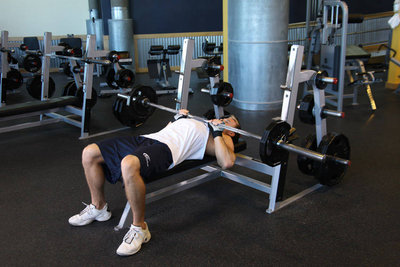
Lying Dumbbell Triceps Extension
Safety Rating for 40+
Benefits for 40+
Trains the long triceps head in the stretched position – Kassiano & Schoenfeld (2023) show superior hypertrophy when training at stretched muscle lengths. The dumbbell version allows a more natural wrist position than barbell skull crushers, reducing stress on the wrist tendons that become more sensitive after 40. As a Tier 2 exercise with moderate SFR, an important building block but to be used with appropriate respect for joint stress.
Form Cues
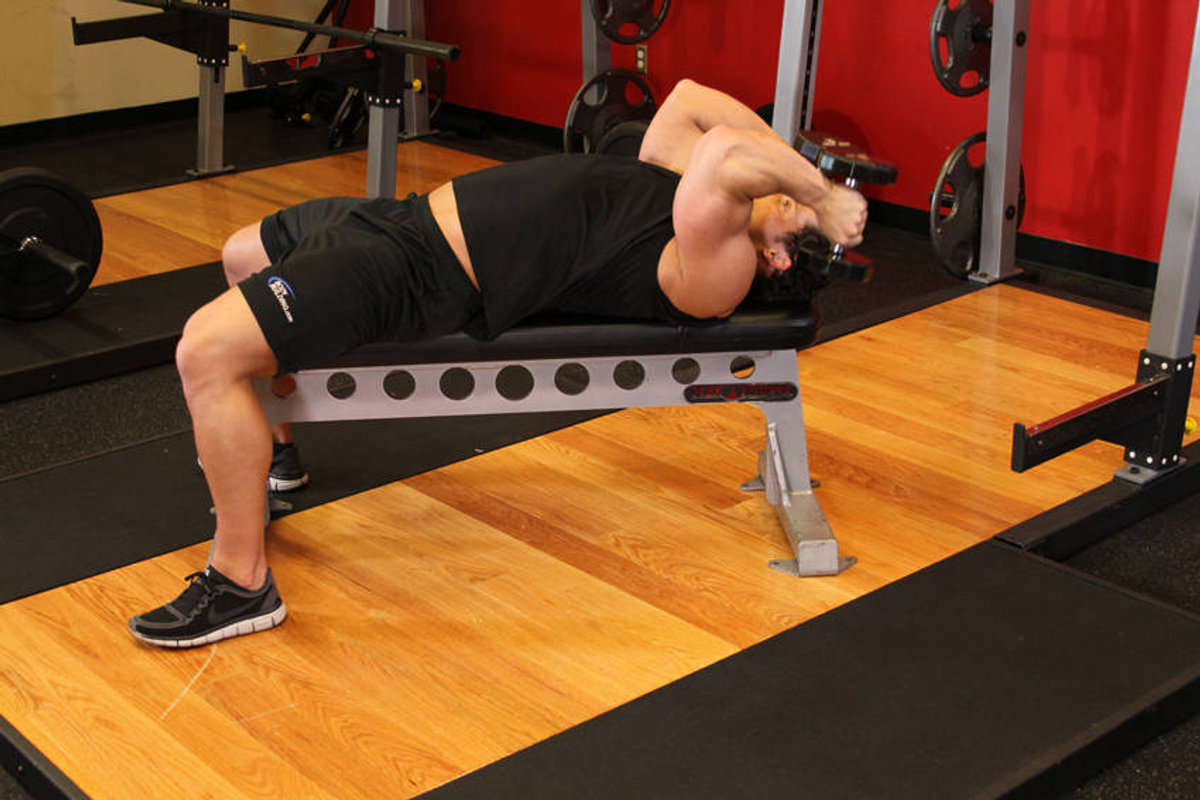
- Lying flat on bench, hold dumbbells vertically above forehead
- Only bend forearms – lower dumbbells beside the ears
- Elbows point to ceiling and stay stable – don't flare out
Common Mistakes
- Too heavy weights – Tier 2 exercise with increased joint risk, prefer moderate weights for 40+
- Elbows flaring out – increases shoulder stress and reduces triceps isolation
- Lowering dumbbells too far behind the head – overloads the shoulder capsule, especially with limited 40+ mobility
- Wrists bending – significantly increases epicondylitis risk
Modifications
Beginner
Start with cable overhead triceps extension instead – same stretch effect with significantly lower joint risk. If skull crushers chosen: very light weights, 15 reps.
For Joint Issues
For elbow issues: switch to cable overhead triceps extension – same stretch effect for the long head but constant cable resistance without the load peaks of free weights. For shoulder issues: slightly increase bench angle (15°) for relief.
Advanced
Slow 4-second eccentric for enhanced stretch stimulus. Moderate weights, never heavier than can be controlled.
Scientific Basis
Trains the long triceps head in stretched position – complementary to pushdowns. Tier 2 due to increased shoulder and elbow risk with heavy weights. Dumbbell version more wrist-friendly than barbell skull crushers.
Contraindications
- Acute epicondylitis (medial or lateral) – free weight extension directly stresses elbow tendons
- Acute shoulder impingement – arm position overhead worsens impingement
- Advanced elbow arthritis – full flexion-extension movement under load is contraindicated
- Wrist instability – free dumbbells require significant wrist stabilization
Related Exercises
Related Guides