
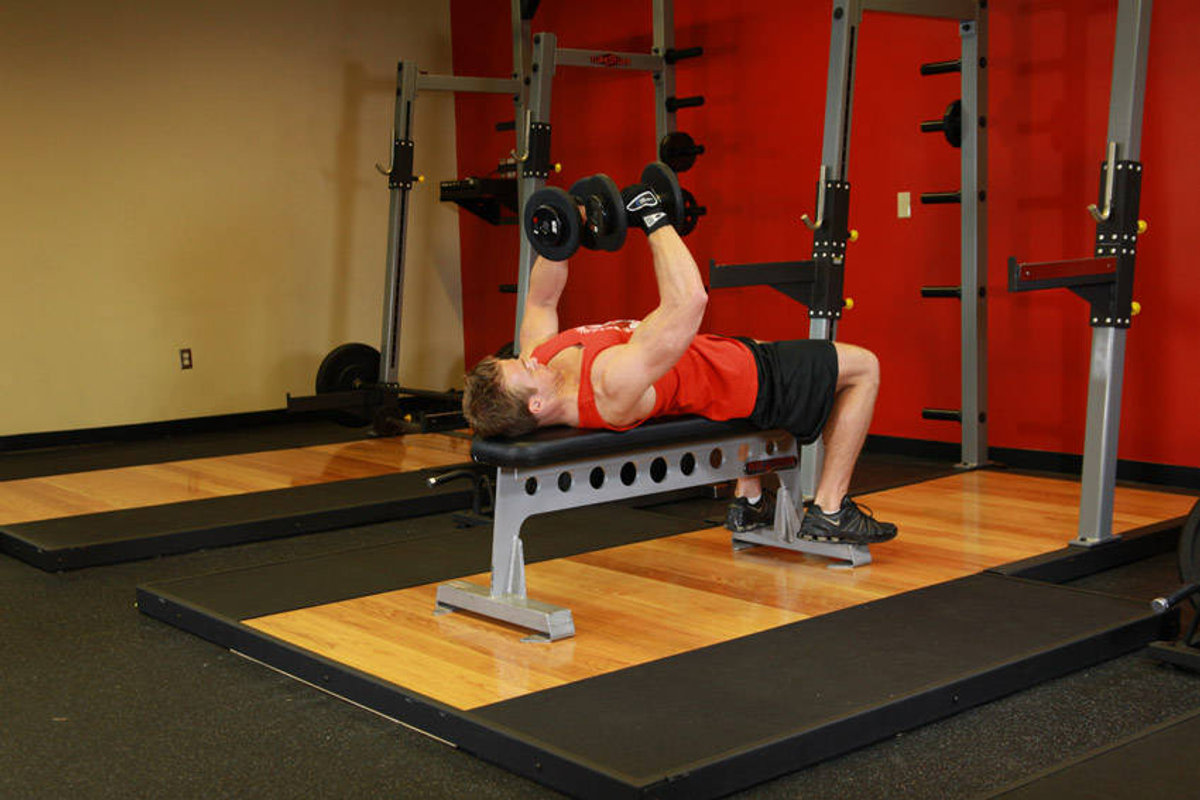
Dumbbell Flyes (Flat)
Safety Rating for 40+
Benefits for 40+
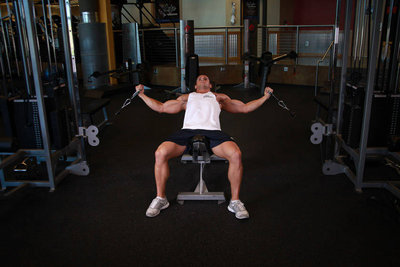
Dumbbell flyes provide the strongest stretch stimulus of all chest exercises – Kassiano & Schoenfeld (2023) showed training at lengthened muscle positions promotes superior hypertrophy. IMPORTANT: Shoulder is rated 'Avoid' – the uncontrolled stretch in the open arm position poses significant risk to the less elastic shoulder capsule after 40. Cable flyes or the butterfly machine deliver the same stretch stimulus with substantially lower shoulder risk and should be preferred. Only suitable for experienced trainees with demonstrably healthy shoulders and conservative range of motion.
Form Cues
- Open arms in a wide arc — keep elbows slightly bent throughout
- Don't lower past shoulder level — respect the stretch limit
- Controlled tempo, especially during the eccentric phase
Common Mistakes
- Performing the exercise without shoulder screening – with an 'Avoid' shoulder rating, pain-free full shoulder ROM must be confirmed before including this exercise
- Lowering too deep – after 40, the shoulder's stretch limit must be strictly conservatively respected; declining capsule elasticity makes deep lowering the primary risk factor
- Arms nearly locked out – slight elbow bend protects the biceps tendon and elbow joint
- Weight too heavy – flyes are isolation exercises; uncontrolled weight in the open position is the primary reason for the Avoid rating
Modifications
Beginner
NOT recommended for 40+ beginners due to 'Avoid' shoulder rating. Use butterfly machine or cable flyes instead – same stretch stimulus with substantially lower shoulder risk.
For Joint Issues
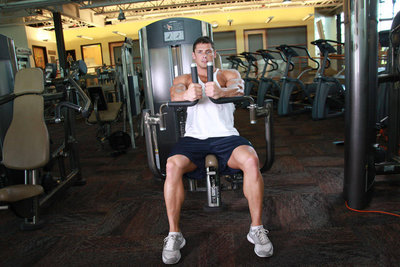
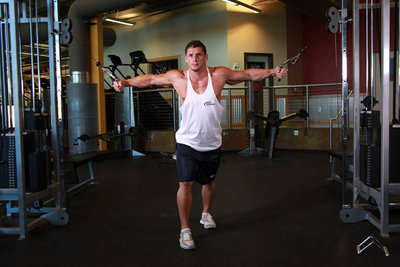
For any shoulder issues: avoid this exercise completely. Recommended alternatives: butterfly machine (guided path, adjustable start point), cable flyes (constant tension), or incline cable flyes. These provide comparable hypertrophy stimulus without the injury risk of free flye movement.
Advanced
Only with demonstrably healthy shoulders: Bottom partials (only in the stretched third of ROM) for maximum hypertrophy stimulus per Kassiano & Schoenfeld. Slow eccentric tempo (5 sec) and strictly conservative range of motion – never below shoulder height.
Scientific Basis
Flyes emphasize the chest in a lengthened position — Kassiano & Schoenfeld (2023) show training at stretched muscle lengths promotes hypertrophy. Tier 2 because the free movement path places higher demands on shoulder health than cable flyes.
Contraindications
- Any shoulder problems – the exercise is rated 'Avoid' for shoulders and should be avoided with any history
- Shoulder instability with anterior subluxation tendency – the open position is a high-risk factor
- Biceps tendon inflammation (the stretch significantly loads the long head biceps tendon)
- Pectoral strain or tear during healing phase
- 40+ trainees without prior experience with flye movements – prefer cable variations
Related Exercises
Related Guide