
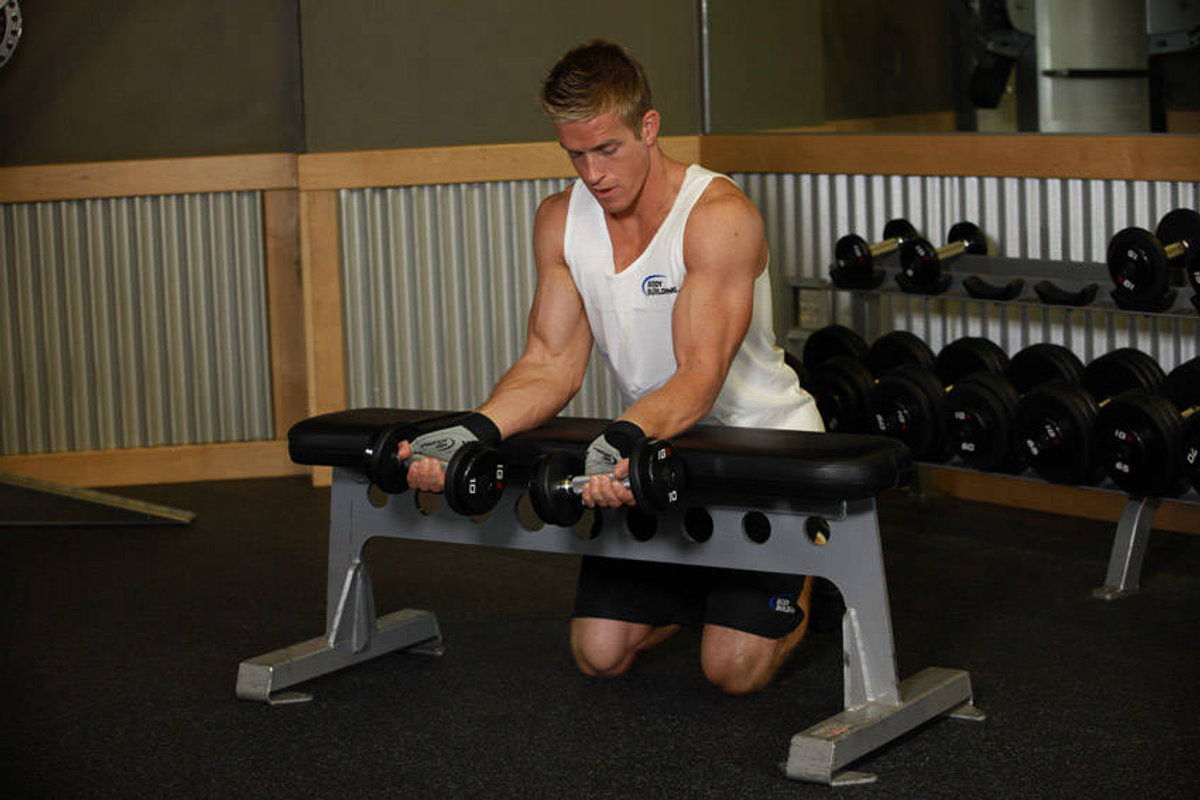
Dumbbell Wrist Curl (Palms Up)
Safety Rating for 40+
Benefits for 40+
Grip strength is one of the strongest predictors of functional independence and overall health in aging – directly trainable through wrist curls. After 40, grip strength declines disproportionately, affecting daily activities like opening bottles, carrying bags, or holding tools. Isolated strengthening of the wrist flexors also supports performance in all pulling exercises (rows, pull-ups, curls) and prevents overuse injuries from weak grip musculature.
Form Cues
- Rest forearms on bench/thigh, let wrists hang freely
- Curl wrists upward (flexion) – hold full contraction 1 sec
- Light weights, high reps (15–25 reps) – slow tempo
Common Mistakes
- Too heavy weights – wrist flexors are small muscles, overloading quickly leads to tendon problems
- Forearms lifting off the support – transforms the isolation into a curl movement
- Too fast tempo – the small tendons in the wrist need slow, controlled loading
- Dismissing the exercise as unimportant – especially for 40+, declining grip strength is a limiting factor for all training
Modifications
Beginner
Start with just 1–2 kg dumbbells or even without weight. 20–25 reps, focus on full contraction.
For Joint Issues
For wrist issues: limit ROM to pain-free range, don't force full lowering. Alternatively: towel wringing or tennis ball squeezing as a more joint-friendly grip strength exercise.
Advanced
Integrate fingertip rolls: let dumbbell roll to fingertips, then curl fingers and wrist simultaneously. Increases ROM and finger flexor involvement.
Scientific Basis
Trains the wrist flexors (inner forearm) – essential for grip strength in all pulling and holding exercises. 40+: grip strength correlates with overall health and functional independence in aging per research.
Contraindications
- Acute medial epicondylitis (golfer's elbow) – wrist flexion directly stresses the medial tendons
- Acute tendon sheath inflammation of wrist flexors – loading worsens the inflammation
- Carpal tunnel syndrome in acute phase – flexion additionally compresses the carpal tunnel
- Recent wrist fracture – no loading until medical clearance
Related Exercises
Related Guide