Machine Triceps Extension
Safety Rating for 40+
Benefits for 40+
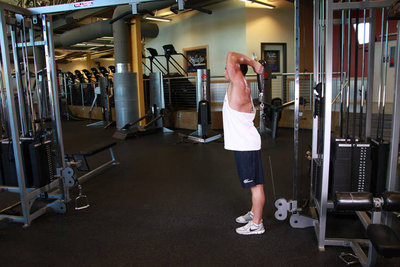
Fisher et al. (2024) show: machine training improves functional capacity in older adults with significantly lower injury risk – epidemiological data shows 90% of weight training injuries are caused by free weights. The machine-guided triceps extension has the highest SFR of all triceps exercises and is safe to train to RPE 10. The overhead position of many machine variants places the long triceps head in stretch – ideal against anabolic resistance after 40.
Form Cues
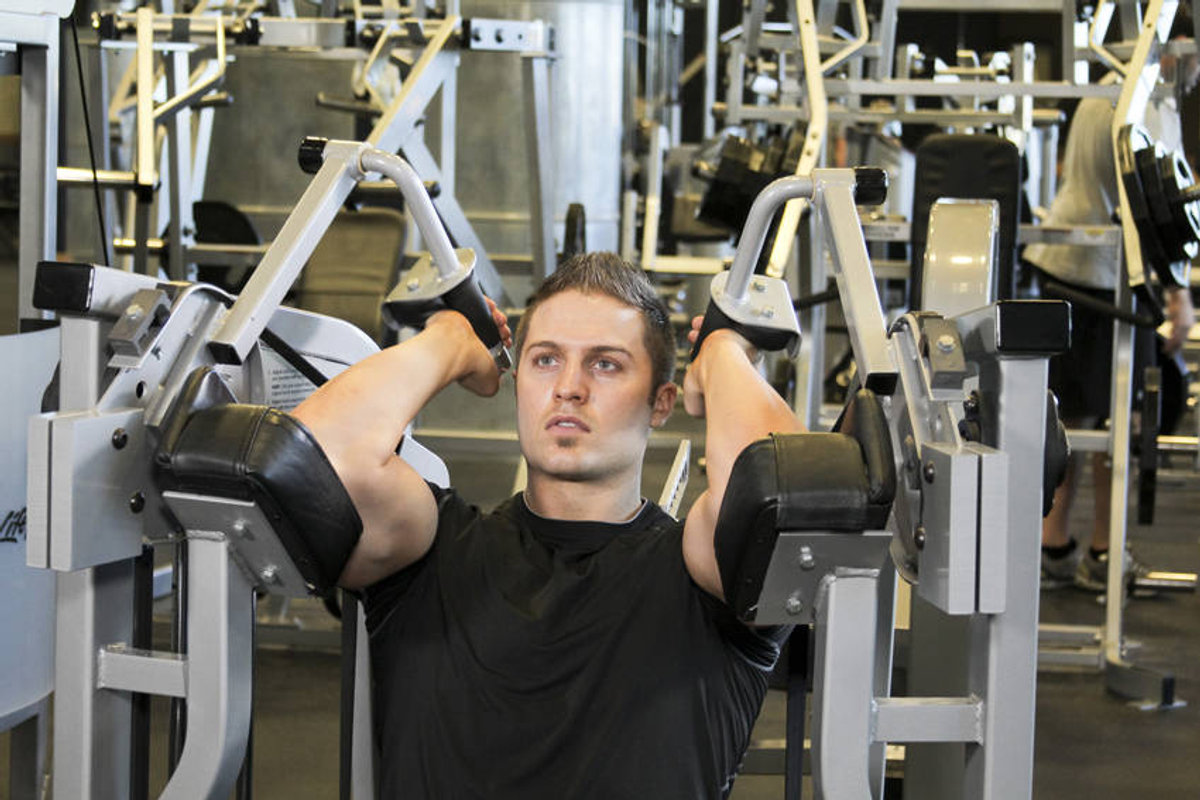
- Adjust seat height: elbows at machine pivot level
- Extend arms under control – aim for full extension
- Return slowly – control the eccentric phase
Common Mistakes
- Seat incorrectly adjusted – elbows not at pivot level leads to shoulder compensation
- Momentum from leaning back and lifting off – eliminates the machine guidance advantage
- Eccentric phase dropped uncontrolled – wastes hypertrophy stimulus and stresses tendons
- Not using full ROM – with pain-free movement, full extension should be achieved
Modifications
Beginner
Light weight, focus on correct seat adjustment and full ROM. 12–15 reps with 3-second eccentric.
For Joint Issues
For shoulder issues (overhead variant): change machine type – prefer pushdown-style machine position. For elbow issues: limit ROM to pain-free range, don't force full flexion.
Advanced
Eccentric overload: both arms concentric, single-arm eccentric in 5 seconds. Or: drop sets with quick pin adjustment.
Scientific Basis
Machine-guided triceps isolation eliminates all stabilization demands. Highest SFR of all triceps exercises – safe to train to failure (RPE 10). Fisher et al. (2024): machines effective with lower injury risk than free weights.
Contraindications
- Acute olecranon bursitis – machine-guided extension creates direct pressure on the bursa
- Acute shoulder impingement (with overhead machine type) – arm position worsens impingement
- Recent elbow surgery – no loading until medical clearance
Related Exercises
Related Guide