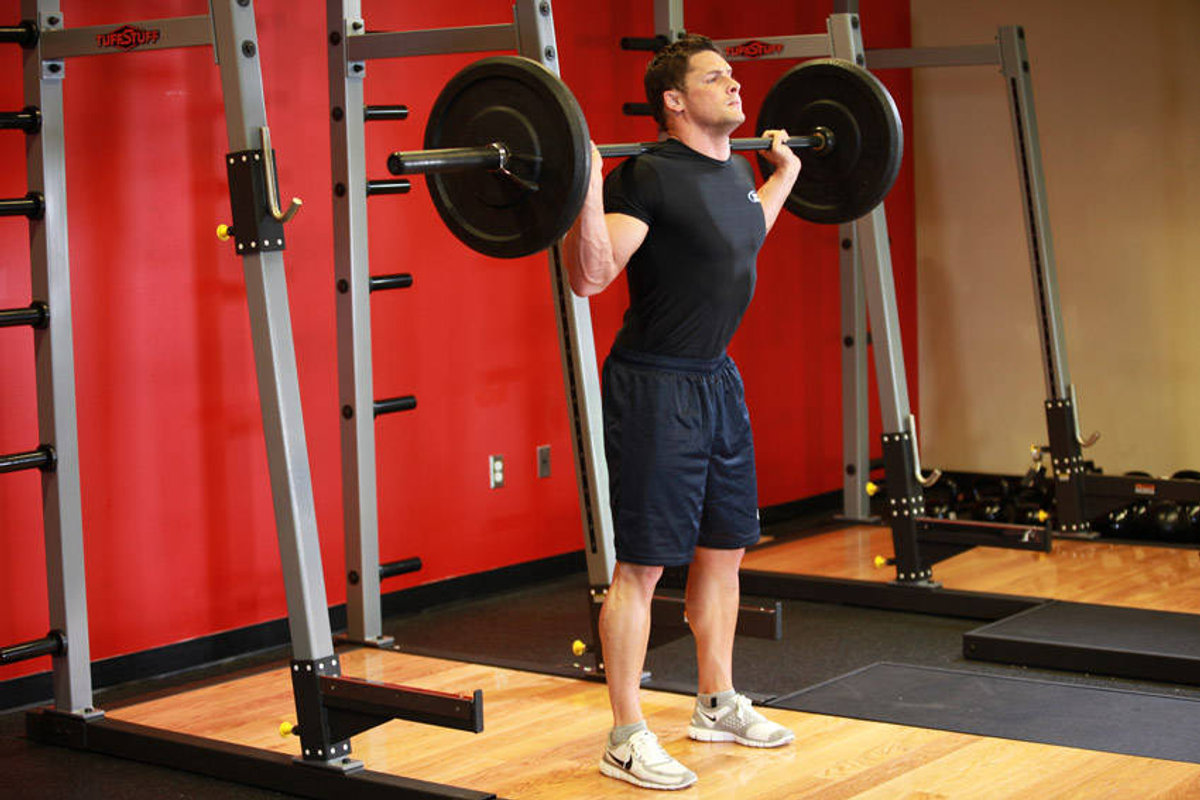
Barbell Back Squat
Safety Rating for 40+
Benefits for 40+
The barbell back squat remains a powerful whole-body exercise for advanced trainees over 40 with solid technique and adequate mobility. It provides osteogenic loading proven to promote bone mineral density – meta-analyses show significant BMD improvements at training intensities above 70% 1RM. However, it requires particular care for those over 40: mobility screening, conservative load progression, and consistent use of safety pins are non-negotiable.
Form Cues
- Position bar on upper trapezius (high bar) or rear deltoid (low bar)
- Maximally brace core, lower under control to approximately 90° knee flexion
- ALWAYS squat with safety pins/arms – never without
Common Mistakes
- Training without safety pins or spotter arms – an unacceptable risk for over-40s
- Too heavy a weight at the expense of depth and technique – ego lifting is the most common cause of injury
- No prior mobility screening – restricted hip or ankle mobility forces compensatory movement patterns
- Spine rounds at the bottom (butt wink) – especially risky with degenerative changes after 40
Modifications
Beginner
Not recommended for beginners over 40. Instead, start with goblet squat, box squat, or leg press and only transition to barbell after solid technique and sufficient mobility are established.
For Joint Issues
For knee issues: limit depth to maximum 90°, use box squat as a safer alternative. For back issues: use a safety squat bar that unloads the upper back. For shoulder issues: use low-bar position or safety squat bar.
Advanced
Periodized programming alternating between hypertrophy (8–12 reps, RPE 7–8) and strength phases (4–6 reps, RPE 7–8). Limit heavy squats to 1x/week to protect tendons and joints.
Scientific Basis
Classic foundational exercise for whole-body strength. Tier 2 for 40+ per research: requires mobility screening, adequate hip mobility, and solid technique. Lowest SFR of all squat variations due to high systemic fatigue. Avoid heavy squats below 90°.
Contraindications
- Acute or chronic back pain with disc involvement
- Severe knee OA (Grade III–IV) without medical clearance
- Inadequate hip or ankle mobility without prior mobility screening
- Shoulder impingement making bar holding painful
- Uncontrolled hypertension
Related Exercises
Related Guides