
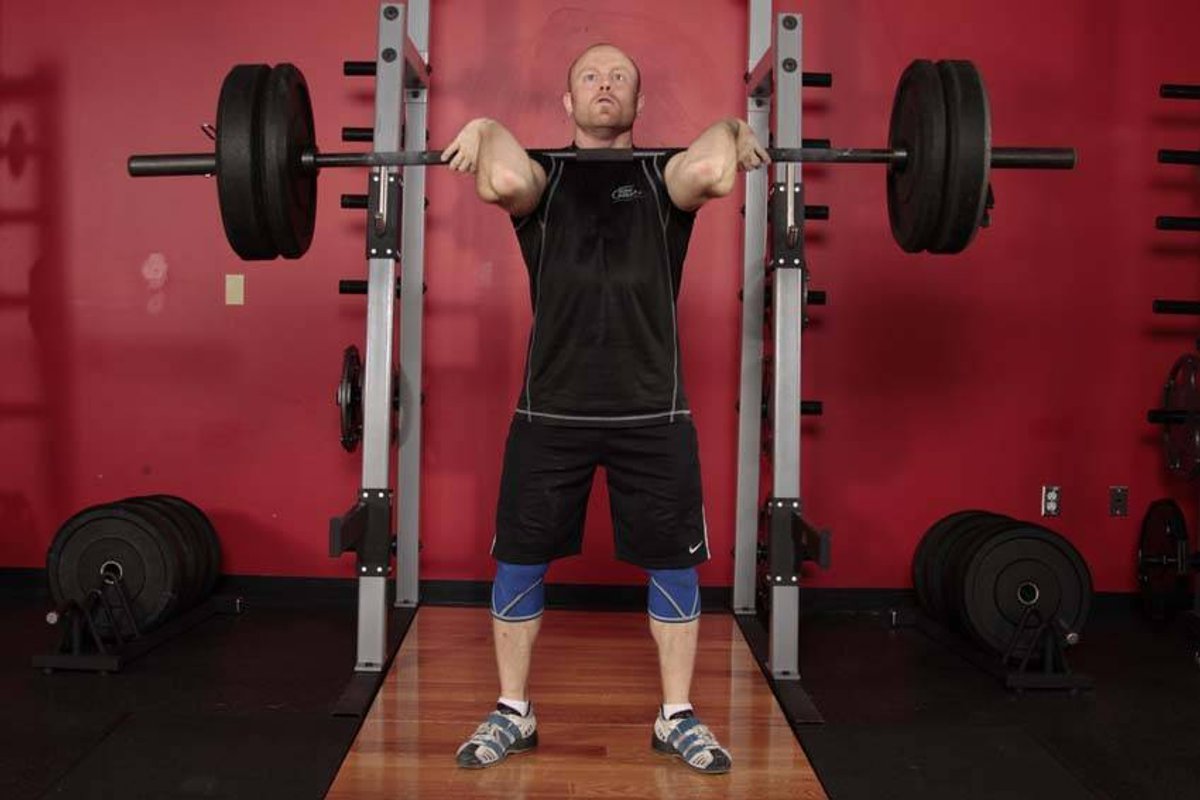
Front Squat (Barbell)
Safety Rating for 40+
Benefits for 40+
The front squat forces a more upright torso than the back squat, significantly reducing lumbar spine stress. Its self-limiting nature – on technique failure the bar falls forward instead of onto the back – makes it safer than the back squat. For over-40 trainees with sufficient wrist and thoracic mobility, it offers excellent quadriceps loading with reduced spinal compression.
Form Cues
- Rest bar on front deltoids, keep elbows high
- Extremely upright torso – otherwise the bar rolls forward
- Check wrist mobility – use cross-grip or straps if needed
Common Mistakes
- Elbows drop, causing the bar to roll forward – often caused by insufficient thoracic mobility in over-40s
- Wrist pain from inadequate wrist mobility – especially common in over-40s
- Torso tips forward in the deep position – sign of insufficient core strength
- Too heavy weight that compromises technique
Modifications
Beginner
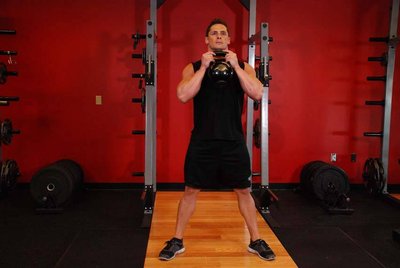
Not recommended as an entry exercise. Instead, start with goblet squat, which uses the same front-loading principle but requires significantly less mobility.
For Joint Issues
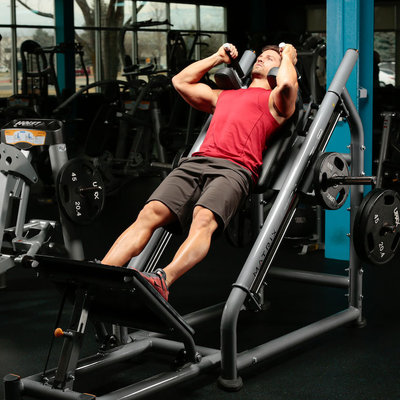
For wrist issues: use cross-grip or lifting straps. For knee issues: limit range of motion to 90°. For shoulder issues: switch to goblet squat or leg press.
Advanced
Pause front squats with 2–3 seconds at the bottom for maximum core stability. 1.5-rep method for intensified quadriceps loading.
Scientific Basis
Forces a more upright torso than back squat, which unloads the lumbar spine. Self-limiting – on technique failure the bar falls forward instead of onto the back. Tier 2 due to high demands on wrist and thoracic mobility.
Contraindications
- Significant wrist or shoulder problems making the rack position impossible
- Insufficient thoracic mobility preventing an upright torso
- Acute back problems – despite reduced lumbar stress, axial compression remains
- Advanced knee OA with pain in deep flexion
Related Exercises
Related Guides