Close-Grip Barbell Bench Press
Safety Rating for 40+
Benefits for 40+
As a compound exercise, the close-grip bench press enables the highest absolute load on the triceps – important for progressive overload which according to O'Bryan et al. (2022) improves both muscle strength and bone mineral density even in adults over 65. The loaded barbell movement also promotes bone density in wrists and forearms – especially valuable as an osteogenic stimulus against the declining bone mass after 40. RPE-based autoregulation is essential here due to daily variability in 40+.
Form Cues
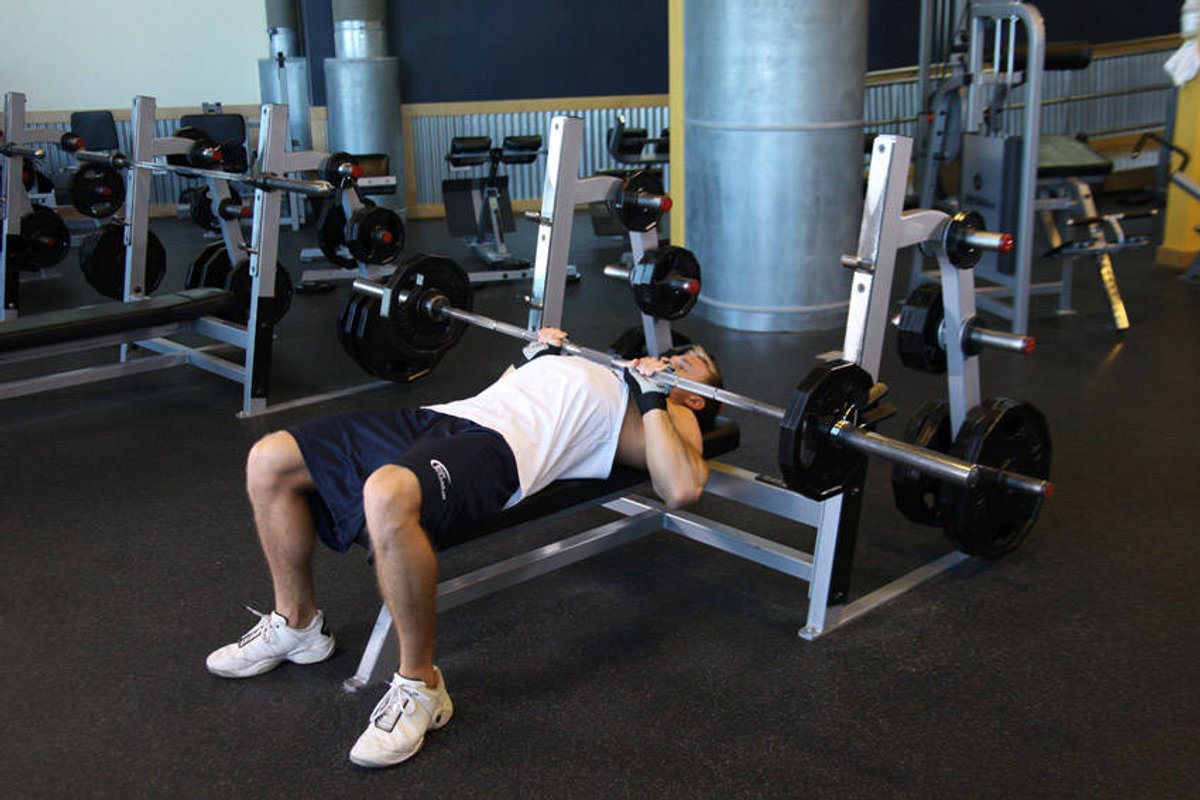
- Grip approximately shoulder-width or slightly narrower – NOT too narrow (wrist stress)
- Keep elbows close to body, lower bar to lower sternum
- Always with spotter or in power rack with safety pins
Common Mistakes
- Grip too narrow (under shoulder width) – dramatically increases wrist stress, epicondylitis risk for 40+
- Training without spotter or safety pins – no unnecessary safety risks for 40+
- Elbows flaring out instead of staying close – shifts load to shoulders and increases impingement risk
- 1RM attempts instead of RPE-based training – higher risk of tendon and joint damage with maximal attempts for 40+
Modifications
Beginner
Start with dip machine or pushdowns instead – same triceps work with significantly lower risk. Only consider after 6–12 months of training experience.
For Joint Issues
For shoulder issues: switch to dip machine or cable pushdowns. For wrist issues: keep grip at exact shoulder width and consider using wrist wraps. For elbow issues: avoid this exercise, switch to cable isolation exercises.
Advanced
RPE 6–8 (2–4 RIR) as standard intensity. Paused reps (1 sec pause on chest) for increased strength from the bottom position. Periodized training in the 4–6 rep range for strength.
Scientific Basis
Compound exercise with highest absolute load for triceps. Tier 2 due to increased wrist and shoulder stress. Shoulder-width grip (not ultra-narrow!) minimizes wrist issues. Complements isolation exercises for maximum strength development.
Contraindications
- Acute shoulder impingement or rotator cuff issues – the pressing movement under heavy load worsens symptoms
- Acute epicondylitis (medial or lateral) – grip loading under heavy weight is contraindicated
- Wrist fracture or instability – the barbell position fixes the wrist in a stressful position
- Acute thoracic spine issues – the arched position and weight pressure stress the thoracic spine
Related Exercises
Related Guide