
Hack Squat Machine
Safety Rating for 40+
Benefits for 40+
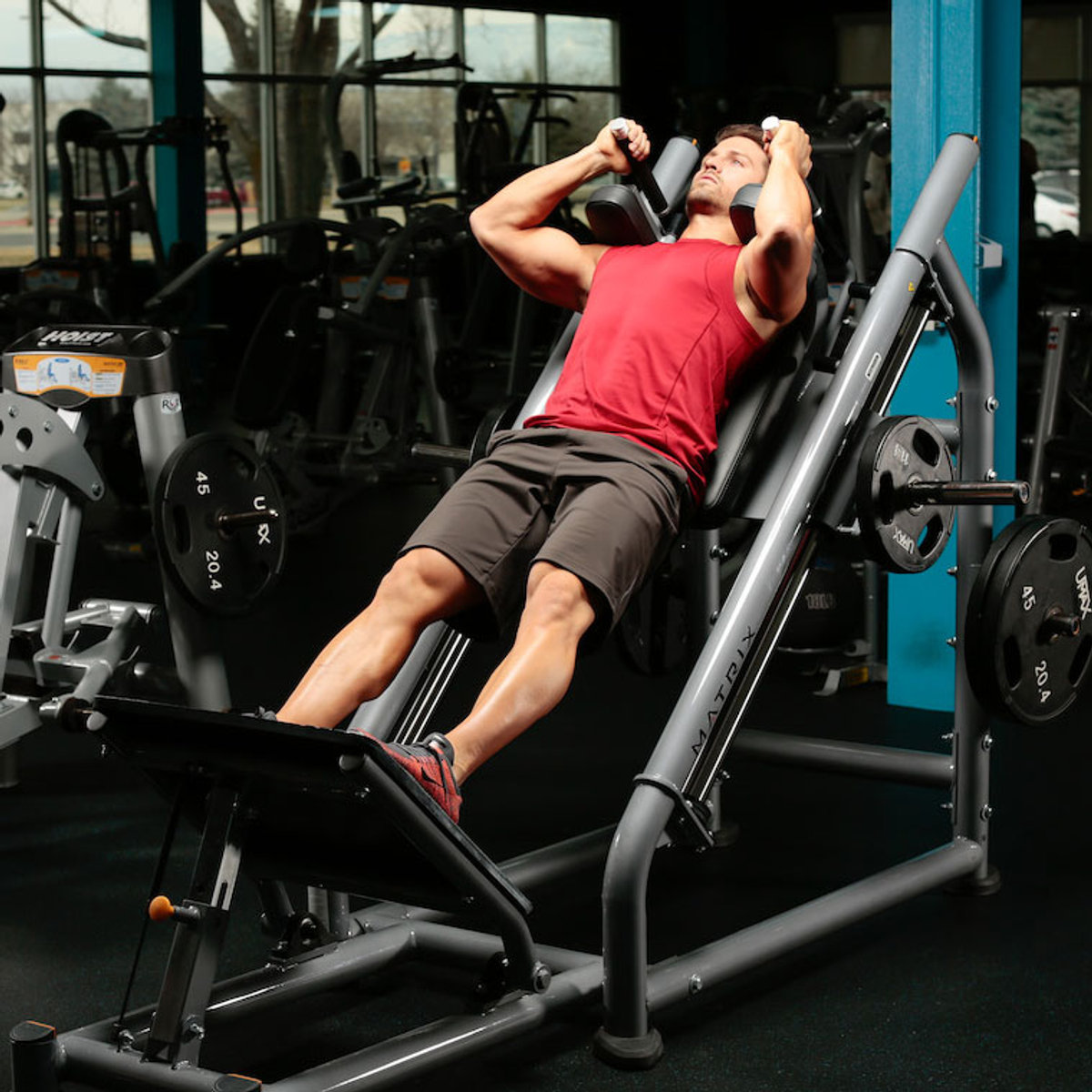
The hack squat machine provides excellent quadriceps loading with minimal spinal compression for those over 40. The guided movement path eliminates stability demands, allowing full focus on muscle work – ideal with declining proprioception or balance challenges. The high stimulus-to-fatigue ratio means maximum muscle stimulus with low systemic fatigue, which is particularly relevant given the reduced recovery capacity after 40.
Form Cues
- Back firmly against pad, shoulders under pads
- Feet shoulder-width, slightly ahead of center of gravity
- Lower under control to 90° knee flexion – not deeper with heavy weight
Common Mistakes
- Lowering too deep with heavy weight – increases knee shear forces and can be problematic for over-40 cartilage
- Knees caving inward – indicates muscular imbalance in the hip abductors
- Feet too close to the platform edge, destabilizing the heels
- Jerky reversal at the bottom instead of a controlled direction change
Modifications
Beginner
Start with just the machine's sled weight. Limit range of motion to 45–90° and gradually increase.
For Joint Issues
For knee issues: position feet higher and wider, limit range of motion to pain-free 45–90°. For shoulder issues: adjust pad position so shoulders aren't under pressure.
Advanced
Single-leg hack squats for asymmetry correction. Tempo variations with 4-second eccentric phase. Vary foot position: narrow for vastus lateralis, wide for adductors.
Scientific Basis
Hack squat is a high-SFR exercise per research. Guided path unloads the spine while maintaining high quadriceps activation. Machine-guided = no stability demand, purely focused on muscle work.
Contraindications
- Acute knee joint inflammation or significant knee OA with pain above 5/10
- Shoulder issues where pressing against the pads causes pain
- Recent knee or hip surgery without medical clearance
Related Exercises
Related Guide